
It took just four months to reach this global milestone, and hitting the two-billion mark could happen even faster, say scientists
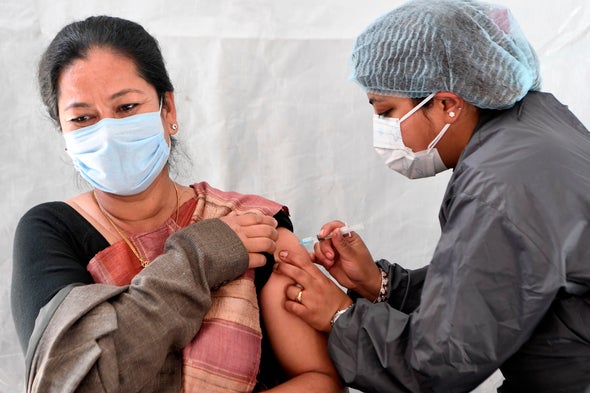
Ensuring global vaccine equity is a matter of self-interest for high-income countries in beating the pandemic, says Peter Hotez, a vaccine scientist at Baylor College of Medicine in Houston, Texas. “You can’t do that with under a dozen countries fully vaccinated,” he says. “In terms of saving lives and restoring the global economy, we need places like Myanmar and Papua New Guinea to be successful.”
Global response
Disparities also exist within nations see (‘Racing ahead’). For example, one UK study found that, of 1.1 million people aged over 80 who were treated for health conditions in clinics and hospitals between December and January, 42.5% of white participants had been vaccinated, compared with just 20.5% of Black participants. The same study also found evidence of divides along socio-economic lines.
“Vaccinating only portions of the population is not an effective strategy, and leaves us vulnerable to new variants,” warns Udayakumar. “A global pandemic can only be met with a global response.”
Global vaccine manufacturers are scaling up production to meet demand, but this might take another 6–12 months to achieve, he says. Nevertheless, we are likely to hit the two-billion mark much faster than we hit the first billion, adds Swaminathan.
This article is reproduced with permission and was first published on April 29 2021.


No comments:
Post a Comment