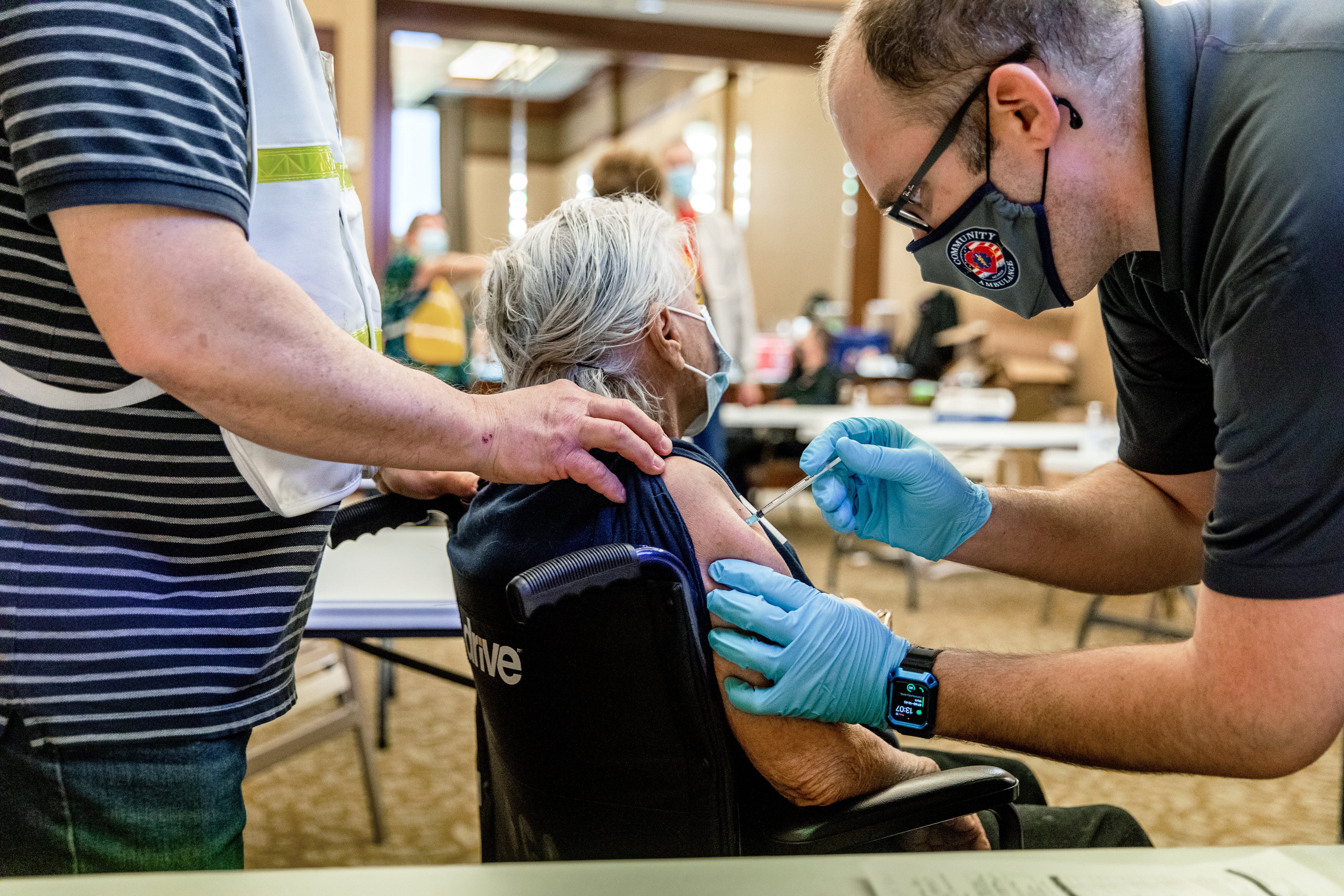
So far, reactions to the mRNA vaccines are similar. These vaccines are administered in a two-dose routine: the very first shot sets off an immune reaction, and the 2nd is a ‘booster’ that enhances the body’s ability to combat the coronavirus. For the Pfizer– BioNTech vaccine, which has actually remained in usage longer than the Moderna vaccine and for that reason has actually produced more data, adverse effects increase with the 2nd dosage.
In the United Kingdom, 3 million dosages of another vaccine, developed by the University of Oxford and pharmaceutical firm AstraZeneca, have been doled out.
Couple of individuals have gotten a 2nd dosage of the Oxford– AstraZeneca vaccine since the United Kingdom used its supplies to administer a first dosage to as many people as possible, but clinical-trial data presented to the EMA recommend that adverse effects of the second shot are milder than those brought on by the very first.
Security information for shots rolling out in other parts of the world, such as the COVID-19 vaccines in China, are harder to come by. Preliminary data from medical trials of the adenovirus-based Sputnik V vaccine in Russia suggest its most typical side effects include flu-like symptoms and injection-site responses.
How does that compare to side effects from an annual flu shot?
At least for the mRNA vaccines, doctors are seeing more side effects than for flu shots, says Helen Chu, an infectious-disease expert at the University of Washington School of Medicine in Seattle, who directs the Seattle Flu Study. In a scientific trial for the typical influenza vaccine Flubok Quadravalent, around 34%of individuals aged 18–49 had a systemic reaction.
Chu says the mRNA COVID-19 vaccines create an especially strong immune reaction that increases the risk of adverse effects, although this also implies that the vaccines are working. She keeps in mind that her 2nd dosage of the Pfizer– BioNTech vaccine made her ill. “I got the vaccine, and 6 hours later on, I had chills, a high fever, muscle aches and I went to sleep for 24 hours,” she says. “Then by 36 hours later, it was absolutely over and I was back to regular.” However Chu would rather be momentarily ill from a vaccine than handle COVID-19, “a possibly mortal illness that could eliminate me”, she says.
Have examinations connected any deaths to a COVID-19 vaccine?
Although some have actually questioned whether the vaccines have caused deaths, none have been directly credited to a COVID-19 jab. After 33 elderly care-home residents in Norway passed away within 6 days of getting the Pfizer– BioNTech vaccine, investigations by both the Norwegian Medicines Agency and the World Health Organization concluded that these deaths were in line with normal death rates in this age and that the vaccine is still safe for older individuals. India’s Ministry of Health and Family Welfare reported 27 deaths in the country, but none of these have been connected straight to a COVID-19 vaccine either.
It is “very tough” to definitively link a death to the vaccine itself, states Hilda Bastian, a writer and scientist who specializes in confirming evidence-based health claims. Another factor is that, right now, clinicians are focusing on vaccines mainly for a population of older individuals with underlying health conditions.
What do scientists learn about the uncommon, but serious, allergic reactions to the vaccines?
The Moderna vaccine elicits about three anaphylactic reactions per million doses administered, and the Pfizer– BioNTech vaccine sets off five reactions per million dosages, according to VAERS information This is a greater rate than many other vaccines– consisting of annual flu shots, which activate anaphylaxis for just one out of every million doses administered. For the Oxford– AstraZeneca vaccine, 30 cases of anaphylaxis have been validated in general so far, out of a little bit more than 3 million administered doses. Vaccine experts anticipate that these rates might alter as more shots are administered.
Although some people have required hospitalization, all have totally recovered. Public-health officials advise people with a history of allergies to any of the vaccines’ active ingredients not to get a COVID-19 jab.
Unlike COVID-19, anaphylaxis is treatable with drugs such as epinephrine if caught quickly, states Paul Offit, a vaccine and infectious-disease professional at the Kid’s Medical facility of Philadelphia in Pennsylvania, who participated in the US Food and Drug Administration advisory-committee meetings that led the agency to license both mRNA vaccines.
Most of the people who experienced anaphylaxis had reacted to other substances prior to: about 80%of individuals who reacted to the Pfizer– BioNTech vaccine, and 86%to the Moderna vaccine, had a history of allergies, according to the United States Centers for Illness Control and Avoidance.
The particular cause of the anaphylactic responses stays unknown, however the US National Institute of Allergic Reaction and Contagious Illness informed Nature in an e-mail that the company has actually created a clinical trial to determine the underlying system, however did not define when the trial would begin.
What could be triggering the allergies?
Some scientists have had their eye on polyethylene glycol (PEG) as the anaphylaxis-causing representative in the mRNA vaccines. The Moderna and Pfizer– BioNTech vaccines utilize hollow lipid nanoparticles to store and after that deliver their mRNA payload to cells. PEG is linked to the lipids in these particles and, under regular circumstances, assists them to sneak by the immune system. Although PEG-linked particles are found in a variety of products, such as laxatives and gout medications, they have actually been known to cause allergic reactions.
Follow-up research studies in people who experienced anaphylaxis could assist to figure out whether PEG is the culprit, says Samuel Lai, a pharmaco-engineer at the University of North Carolina at Chapel Hill. If blood samples from these people consist of anti-PEG antibodies, it could be a sign, says Lai, however it is yet unclear how long these proteins stay in the blood stream after anaphylaxis.
Vaccines that don’t utilize PEG– such as the not-yet-authorized shot from Johnson & Johnson, which likewise utilizes an adenovirus to set off resistance to the coronavirus– might be a method to vaccinate individuals with a level of sensitivity to the polymer, he includes.
Since mRNA vaccines have actually revealed such promise, Ulrich Schubert, a polymer researcher at the University of Jena in Germany, believes now is the time to invest in establishing vaccine-compatible polymers that don’t trigger allergic reactions. At the German Research Foundation-funded collective research center PolyTarget, where Schubert works, these research studies are currently in progress. “If we wish to be all set for the next pandemic– which will come– we need to start now,” he states.
This post is reproduced with authorization and was first published on February 16 2021.


No comments:
Post a Comment