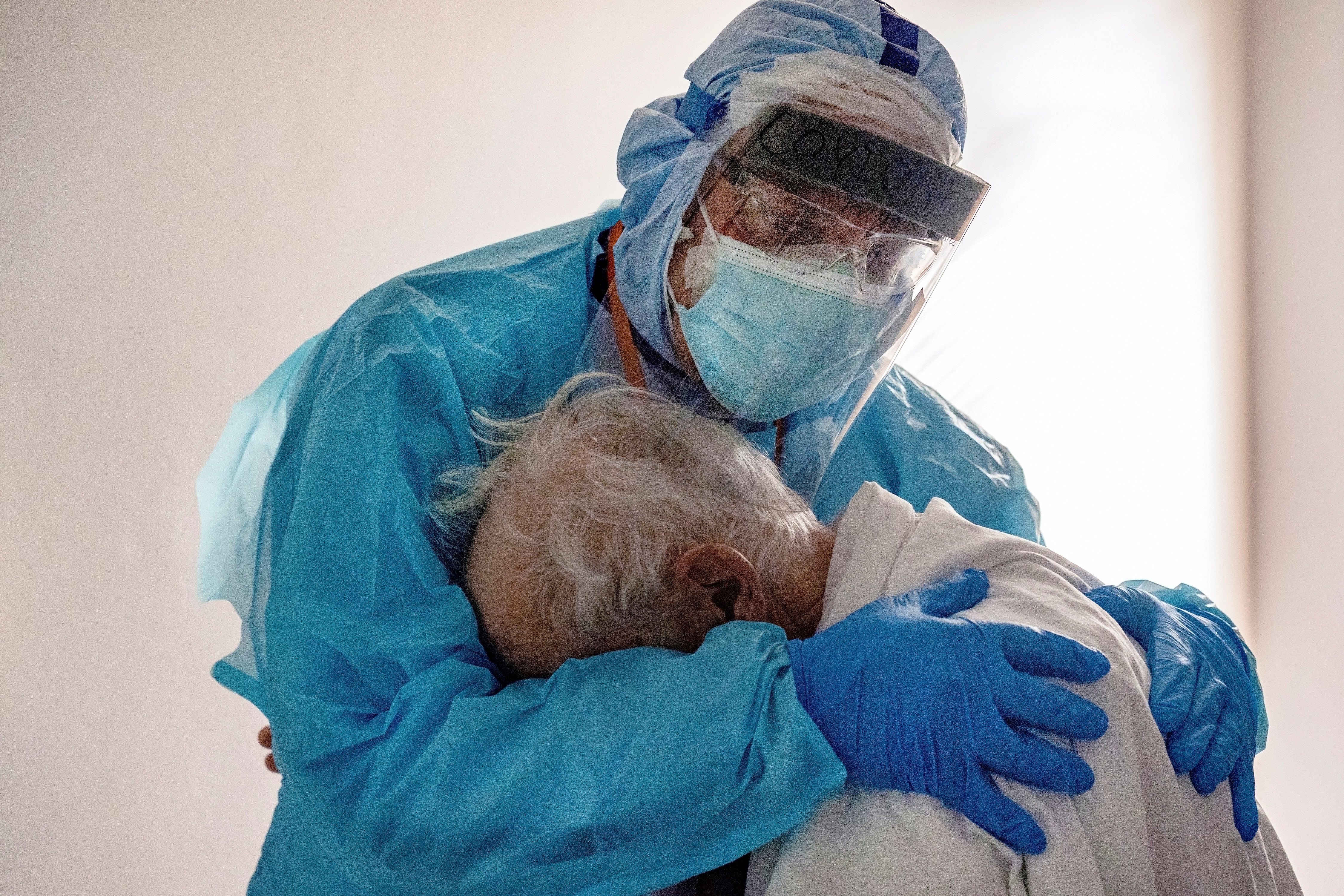
The progression was swift: borders clamped shut, authorities released stay-at-home orders, and public life ground to a near stop. Most of the world had no experience handling an infectious disease break out of this scale. The previously unidentified infection, now called SARS-CoV-2, could spread through the air, frequently prior to (or, sometimes, possibly without ever) causing any signs. COVID– though mild for many individuals– overruled elderly and more susceptible people( and sometimes really healthy ones) with a revenge, introducing a wave of fear, suffering and death unlike any in current memory.
.
” In the start, when this began a year back, we knew that it was spreading. And we understood that it also was deadly in some portion of people,” states Stanley Perlman, a virologist at the University of Iowa, who is a specialist on coronaviruses, a group that consists of SARS-CoV-2.” However I do not believe we had a full appreciation about how bad it was.”
Amongst the biggest shocks was that the U.S. fared even worse than most other nations, with more than29 million cases and almost 530,000 deaths since this writing.” We definitely can’t
state that we had the most robust response to the pandemic, up till this point, due to the fact that we have had a greater death rate per capita than so many other locations,” states Monica Gandhi, a professor of medication at the University of California, San Francisco.
As the country raced to respond to this brand-new and terrifying scourge, errors were made that together cost numerous countless lives. The vigorous efforts of health care employees, along with an unmatched vaccine push, have actually conserved numerous others. Scientific Americanspoke with researchers and public health specialists about the greatest mistakes in the U.S.’s response, some of the key successes and the sticking around concerns that still need to be responded to.
.
What Failed
Minimizing the risk and sidelining experts. Throughout the pandemic’s important early days and weeks, then president Donald Trump and other authority figures actively lessened the virus’s hazard. Trump dismissed it as no worse than the flu and stated the pandemic would be over by Easter.
” One thing that shouldn’t have actually been done is individuals minimizing the infection,” Perlman says. “The Trump administration truly securely managed what [the CDC] might put out,” states Angela Rasmussen, a virologist at the Georgetown University Center for Global Health Science and Security.
Slow and flawed screening. The CDC developed its own test for the infection rather than utilizing a German-developed one utilized by the World Health Organization The Food and Drug Administration was sluggish to authorize tests made by personal companies, says Caitlin Rivers, an epidemiologist at the Johns Hopkins Center for Health Security.
Testing accessibility has improved but stays uneven. Some scientists still have concerns about the accuracy of these tests, and the FDA has actually been sluggish to authorize them
Inadequate tracing, isolating and quarantines. The timeworn approaches of combatting an infectious disease– testing people who might be ill, tracing their contacts, and separating or quarantining those who are favorable or exposed– worked for COVID too. The WHO consistently stressed the significance of these measures, and nations that followed this suggestions closely (such as Vietnam, Thailand, New Zealand and South Korea) prospered in controlling their break outs. In addition to its test problems, the U.S. did not do a sufficient task of isolating those who were known or presumed to be infected (or had actually recently traveled to a high-risk area), tracing their contacts or requiring quarantines for those who were exposed. China imposed very strict, city-wide quarantines. Other nations required those who may have been exposed to remain at a government-approved hotel or other center for a quarantine varying from a few days to a couple of weeks. Such policies would likely have been harder to carry out in the U.S., a nation that prides itself on individual liberties. Not doing so came at the expense of keeping the virus in check.
Complicated mask assistance. The CDC changed course and suggested cloth face coverings in April In these instructions, professionals pointed to a lack of high-quality evidence for mask use.
Even after health professionals reached an agreement that masks were efficient, Trump refused to set an example by using one in public. A research study in Nature Medicine released online in October approximated that universal mask wearing could have saved almost 130,000 lives throughout the fall and winter of 2020–2021 Several states, such as Texas and Mississippi, have actually just eliminated mask mandates and other restrictions completely.
Early in the pandemic, U.S. health authorities believed the infection spread out primarily by direct contact or reasonably large beads from a neighboring cough or sneeze– not by far smaller sized droplets, called aerosols, that stick around in the air. The latter– which critics have dubbed “health theater”— continues to be a focus of numerous offices and companies.
Structural bigotry sustained health injustices. The pandemic exposed and exacerbated deep-rooted racial and financial injustices in health and health care.
Decentralized action. The U.S. federal government’s structure implied that much of the pandemic reaction was left up to state and local leaders. In the absence of a strong national method, states carried out a patchwork of mostly uncoordinated policies that did not successfully suppress the spread of the virus. This triggered sudden, massive spikes of infections in lots of local break outs, placing huge strain on healthcare systems and leaving no region untouched by the illness. “Every district, every county, every state could make decisions and keep them to themselves,” Gandhi states. “And we simply have irregular applications of public health recommendations in a way that I can’t think of any other nation does. The Trump administration has actually been commonly criticized for how the pandemic played out here. Gandhi adds that the U.S. federal government’s decentralized nature would likely have been a barrier under any president.
What Went Well
Despite the numerous mistakes and bad policy options in the U.S. reaction, there were some unbelievable success stories, too.
Vaccines. Less than a year after the virus was genetically sequenced, two vaccines– one made by Pfizer and BioNTech and another established by Moderna– were found to have roughly 95 percent effectiveness in avoiding symptomatic COVID and were authorized for emergency usage in the U.S.
Even more, Black and Hispanic people are being vaccinated at far lower rates than white people. And more work is required to get rid of vaccine hesitancy in some populations, including Republican voters. The rate of vaccinations is selecting up, and Biden has stated the country is on track to have adequate vaccine dosages for every U.S. adult by the end of May, fueling pledge of a return to some normality in the coming months.
Heroic efforts of health care workers. Faced with unprecedented levels of sickness and death, health care workers stepped up and risked their lives to care for COVID clients. Nurses, assistants and orderlies cared for the elderly and most susceptible individuals as the virus wrecked nursing houses
The public (primarily) did its part. Surveys reveal the bulk of individuals use masks when they go out, Johns Hopkins’s Rivers states.
Combatting false information. When Trump made unsupported claims about safety levels or mask wearing or dubious COVID “treatments,” reporters and high-profile scientists such as Anthony Fauci quickly set the record straight.
Lingering Questions
As the world passes this 1 year milestone in the pandemic, numerous unknowns stay.
What will occur with the new versions? Numerous novel strains of SARS-CoV-2 have emerged that could threaten development versus the disease. Some vaccine makers are currently working on booster shots, ought to they be needed.
How long will resistance last? A big research study demonstrated that individuals who had recuperated from infection still had antibodies, as well as so-called memory B cells and memory T cells, 6 to eight months later The CDC just recently released guidelines stating that, with a couple of exceptions, completely immunized people who are exposed to the virus do not need to quarantine if they do not reveal symptoms.
Why do some individuals become COVID “long haulers”? A particular portion of individuals who get COVID develop lingering symptoms that continue for months after their initial infection. Signs range from severe fatigue to brain fog to problems sleeping. Researchers do not yet completely comprehend why some people experience these disturbing results, although other viral infections have actually been known to produce comparable syndromes. The National Institutes of Health has actually revealed plans to invest $1 billion to study “long COVID.” However the disease’s true impact on individuals’s lives might not be understood for decades.
What is the future of SARS-CoV-2? Precisely what will happen to the infection with time stays a mystery. Many researchers believe it will never disappear entirely but might end up being less typical and milder as more people are vaccinated against it– or as they build up some resistance through natural infection. It may ultimately end up being something like the influenza, an infection that distributes every year and triggers some extreme infections and deaths– however does not closed down society. Eventually it might develop into a less virulent form like some pressures of the common cold. But that might take several years.
Find Out More about the coronavirus outbreak from Scientific American here And read coverage from our international network of publications here


No comments:
Post a Comment