
Illustration: Mary Ann Lawrence, USA TODAY Network
Reading brings out the rival in 8-year-old Uriah Hargrave. The second-grader at Eaton Park Elementary in Vermilion Parish along Louisiana’s southwest coast was thrilled to return to in-person learning in January. Among his favorite things is the Accelerated Reader program in which he wins points for the books he checks out.
” I like to read because I like to take AR,” Uriah stated. “You get more (points and rewards) whenever. … The other day I read a huge ol’ chapter book about animals with kids.”
His points pay off in additional spare time outside and “Star Bucks” that he can use to purchase erasers and spy pens at the school store. Plus, his reading helps advance his class’ gingerbread cutout on the Candy Land game bulletin board in the school hallway. He happily explained where his class remained in relation to the other second-grade classes.
Yet too many children may be falling back in the reading game during the pandemic, teachers and experts state. The USA TODAY Network went to a handful of classrooms in various states to see how schools are adjusting at a time when the instructors’ axiom about students finding out to read in early grades so that they can read to learn the rest of their lives has never been put to a greater test.

SCOTT CLAUSE/USA TODAY Network
” Knowing to read is so tough,” said Laura Taylor, a teacher of instructional research studies at Rhodes College in Memphis, Tennessee. “It’s a long process that takes years.”
Lost time from when schools close down, inconsistent schedules ever since, the limitations of teaching over video conference and even personally with masks and social distancing– these handicaps are most likely to have a greater impact on kids learning to read than those at other grade levels, said Anjenette Holmes, a professor at the University of Louisiana at Lafayette’s Picard Center for Kid Development & Lifelong Knowing.
” It’s an extra challenge for that age,” she said.
The pandemic’s complete results on discovering can’t be determined while schools are still dealing with these fresh challenges, the experts concede. But early indicators hint at simply how much ground is being lost during the pandemic, specifically among more youthful grades.
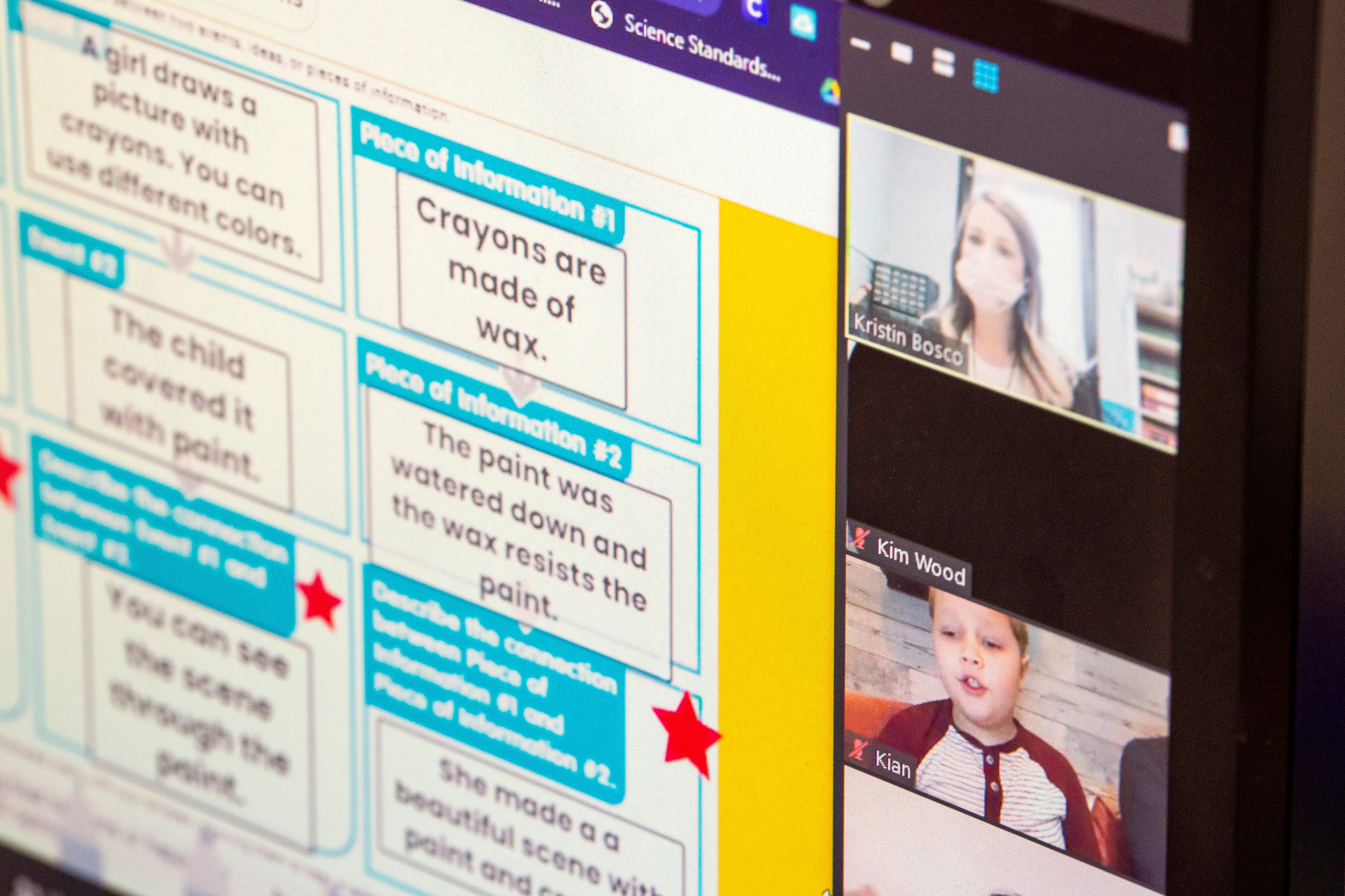
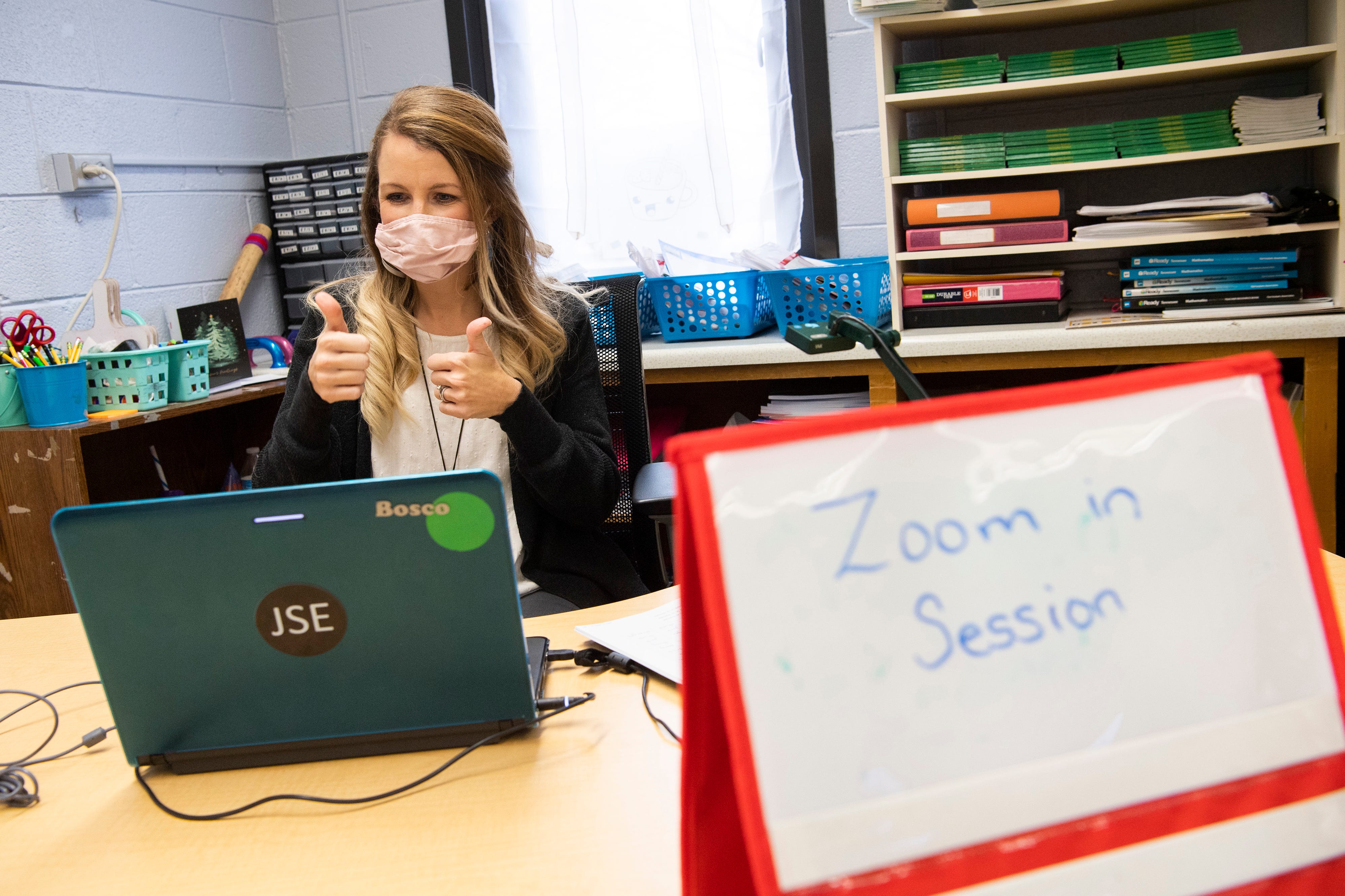
First grade instructor Kristin Bosco offers a thumbs up to her virtual trainees from her class at John Sevier Elementary in Maryville, Tenn.
Very first grade instructor Kristin Bosco provides a thumbs as much as her virtual trainees from her classroom at John Sevier Elementary in Maryville, Tenn.
Brianna Paciorka/News Sentinel
A mid-year report from the DIBELS early reading evaluation reveals near to half of students in kindergarten and first grade scored within the lowest category in early literacy abilities, an increase of practically two-thirds from the same point in 2015.
The analysis, covering approximately 400,000 trainees in more than 1,400 schools from 41 states, likewise shows that compared to in 2015 twice as numerous Black kindergarten trainees are at excellent threat for not finding out to check out.
COVID redshirting: As countless kids avoid kindergarten, the discovering space expands– and schools might lose funding
In Uriah’s district, standardized tests administered at the start of the school year exposed simply how much had been lost from closing down schools in March. Among kindergartners, the tests showed only 47%were at grade level, a drop from 77%the previous year. In first grade, the numbers fell from 90%to 66%. Second graders fell from 81%to 58%. That left educators coming to grips with how to teach brand-new grade-level principles when trainees were still playing catch-up.
Vermilion Parish’s answer is for elementary school instructors to integrate skills trainees missed with “tiny lessons” sprinkled throughout the year. When first-graders get to new content that requires understanding of a kindergarten idea they missed out on last year, the instructor does a mini lesson before starting the new skill.
At Eaton Park Elementary, teachers have actually taken an additional half hour from the school day to dedicate to checking out to help make up for the knowing losses.
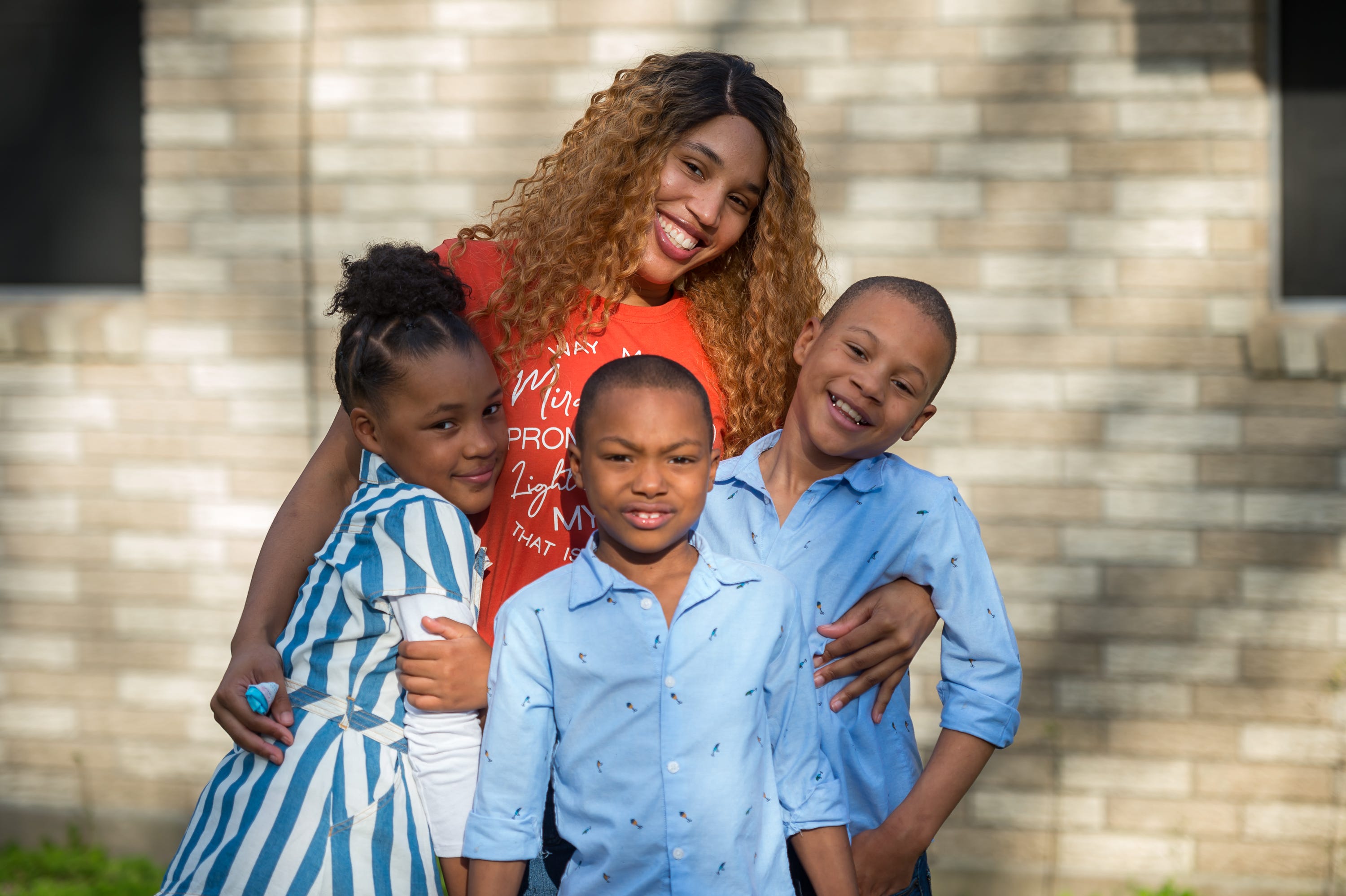
Phaedra Simon, a single mom of three from Opelousas, Louisiana, can vouch for just how challenging it is for kids to learn new product when they’re still mastering foundational abilities.
 Scott Clause/USA TODAY Network
I’m not trained to teach them how to check out. It’s totally various from how I found out.
Simon strove to keep her children– ages 9, 8 and 7– on track when they began the year virtually like everyone else in the St. Landry Parish school district. She even stopped her job to offer her youngest the attention he required.
But as soon as the possibility pertained to go back to in-person knowing, she seized it, even as she continues to worry about their health. ” I’m not trained to teach them how to check out,” Simon said.
She’s continued dealing with them, checking out in the house together every night. “I’m still anxious, waiting to see their brand-new report cards,” Simon said.
School looks different for kids and parents throughout the COVID-19 pandemic
Kindergarteners and their moms and dads describe what school resembles a year into the COVID-19 pandemic.
USA TODAY
Almost a year into remote learning, instilling excellent learning routines stays a day-to-day mission for Pam Bowling, a very first grade teacher at Allen Grade school in eastern Kentucky. She peppers every virtual lesson with favorable narrative– “Excellent job! I hear reading books being opened!”– a management technique generally booked for kids off-task in an actual classroom.
Just now, the 6- and 7-year-olds in Bowling’s class go to from their homes, numerous still putting on pajamas.

Floyd County Public Schools
” Make sure we’re sitting up,” Bowling trilled at the start of her everyday 9 a.m. reading session. “I want you to be comfortable, however I don’t want you to be too comfy, right? We do not wish to go to sleep. We want to ensure we’re staying up, paying attention, similar to we were at school.”
On a mid-February early morning, one set down at a desk, another sprawled on a couch, a third sat cross-legged in her bed, a packed Olaf, the snowman from the movie “Frozen,” at her side.
” I have actually got ’em with hair that appears like they’ve been shot out of a cannon,” joked Bowling, an educator for 25 years. ” They’re getting up and their hair is every which method. And you can tell they’re drowsy.'”
Even for veterans like Bowling, teaching students to read over a video conference call is an unprecedented difficulty.
It’s particularly tough for instructors today. I don’t believe you can make the exact same connections, offer the same in-the-moment feedback or a minimum of as frequently as you might be if you had all of your trainees in a room and you could walk to them and listen into them reading for a minute or two.
” It’s especially difficult for instructors today,” stated Taylor, the early knowing professor from Rhodes College. “I don’t think you can make the very same connections, give the same in-the-moment feedback or a minimum of as often as you might be if you had all of your trainees in a room.”
In Floyd County, a neighborhood of about 36,000 in Kentucky’s rural Appalachia area, Bowling’s pleas for focus and involvement are encouraged by an unsettling reality: Here, hardship rates are high and instructional attainment is low. There is no time to waste.
Except for a quick return to in-person classes in the early fall, Bowling, 50, has been teaching from her dining-room, a “focus wall” showing weekly spelling words and reading skills affixed to a wooden hutch behind her seat.
” I was really skeptical (of remote learning),” Bowling recalled. “I said, ‘I don’t know how we’re gon na go through the camera. I don’t understand how that’s gon na translate.'”
There was no indication of her early hesitation throughout the class’ mid-February lesson as Bowling and her trainees took on sight words, spelling with the brief “e” and nonfiction reading comprehension. Bowling, who said she can be her own worst-critic, said she tries to bear in mind the setup is only temporary.
” It’s simply swallowing the fact that ‘Hey, this is what I have actually been handled,'” she said. “It might not be the best, it might not be the simplest technique, however– and I state this nearly every day to my parents and kids– we’re just gon na roll with the hand we’re dealt.”
The next day, a brutal snow and ice storm would knock out power for almost 48 hours. Just a couple of days after that, another special difficulty loomed: With little time to prepare, Bowling and her kids would ease back to in-person classes on a hybrid schedule, a litany of health and wellness regimens now added to her charge.
” We’re just gon na roll with it,” she said.
SEE: 3 third grade instructors, three perspectives
3rd grade teacher speak about challenges throughout the pandemic
Instructor connects with her students while teaching language arts practically throughout COVID
The hybrid schedule and students in the class throughout COVID
When schools shuttered in March, Sydney Tolbert was a preschooler at The Libertas School of Memphis, Tennessee’s only public Montessori charter school, and was simply making strides in reading, her mom stated.
” She was just right there. And then all of a sudden, we simply stopped,” recalled Stephanie Tolbert, who felt relief that Libertas ended up being one of the few public schools in Memphis that used in-person classes beginning in the fall.
” I understood that if we might get her back in school, that she would just remove,” Tolbert included. “And you might just see her. I watched her just, like, thrive. It was amazing.”
However in-person knowing isn’t always a pandemic remedy, especially for youngsters learning to read. In Sydney’s multi-grade class, instructor Toni Sudduth, a class assistant and the 15 students practice social distancing and wear masks even when outside.

Courtesy image
Although it assists that the curriculum is individualized for each trainee, group reading lessons, like reviewing letter sounds, have needed to be abbreviated. And it’s an obstacle for trainees to be able to see how their instructor’s mouth relocations while sounding out letter combinations and words. Sudduth started the year with a face mask with a clear window, but it kept fogging up. She switched to a clear face shield, so she can pull down her mask behind the shield to show how the sound is made, then pull her mask up as the class makes the sound together, placing their hands to their throat to feel the noise.
Sounding out words is one area where online learning platforms provide a benefit, said Emily Wakabi, a reading interventionist at Libertas. “I used to hint (students) whenever, like, ‘Watch my mouth,'” she said, “and that’s not valuable this year.”
The majority of Wakabi’s work with about 40 kids is done in-person, however she satisfies online with students whose households don’t want to take the danger of going back to school. Throughout a virtual session in February with second grader Jada Man, they dealt with blending letter sounds to make words, and discovering the brand-new letter sound “ph.” The computer system froze at one point, and an animated presentation to direct Jada as she pronounced the words lagged behind.
Yet lots of times Jada showed her enjoyment over what she was discovering, including once after writing down “handout,” a brand-new word with the letter sound she had actually been practicing.
” Was that fast, Ms. Wakabi?” she asked.
” That was so fast! You are fast,” Wakabi stated, discussing later on that developing a student’s confidence is a crucial to reading.
” A lot of times,” she stated, “kids require the motivation and encouragement to read just as much as they require the abilities.”

Brianna Paciorka/News Sentinel
This Zoom meeting included more personality than you see in the common workplace call. A kid sipped water too near the computer system. Another yawned, mouth large open to the screen. A third sat obscured by his pencil box, which was placed in front of the video camera.
Kristin Bosco no longer gets sidetracked by such sights. The first grade instructor at John Sevier Elementary in Maryville, Tennessee, in the foothills of the Smoky Mountains has 17 students in her virtual class.
She’s grown familiar with it by now, even if it might never ever feel regular to teach reading over a computer screen. While the kids check out a passage about a king, looking for words with the “ng” sound, Bosco browsed her Zoom panel to see each face to make sure everyone paid attention.
In between tasks, the kids talk with each other, something Bosco said she thinks is essential for their social growth. Learning this way has actually given her a window into the kids’s house life that she didn’t constantly have. She becomes aware of — and often sees– the children’s family pets and learns things like when a moms and dad changes tasks.
Discussions like these are a crucial structure to literacy, helping kids build vocabulary and practice what they’re learning on the page.
” Allowing children to talk more is actually crucial,” said Holmes from UL Lafayette. “Educators are trained to get kids speaking to each other. They’re not finding out that initial, genuine language otherwise.”
After the class reading, students broke up into groups based upon their reading level. Teacher’s assistant Kim Wood worked with one group, while Bosco stuck with another. 2 groups inhabited themselves with independent activities. The groups rotate every day.
Bosco worked with 2 kids who need the most assistance, taking turns with them checking out a digital book about ice cream. One boy, Kian, informed his instructor how much he likes ice cream, making a connection in between it and the healthy smoothie he has every night.
 Provided
Enabling children to talk more is truly essential. They’re not discovering that initial, authentic language otherwise.
Kian’s mom, Adrienne Schwarte, said virtual learning has actually allowed her to witness more of the learning process than she may otherwise see. Schwarte, a college teacher, and her partner just recently included a reading nook to their house to give Kian and his brother chances to check out.
” We have actually seen his confidence level actually grow with reading,” Schwarte included. “I would state Kian was probably a bit of a slower reader at his grade level at the start of the year compared to a few of the other students, and he’s really gotten over the last 3 or four months.”

Lisa Gemar, a 3rd grade language arts instructor at Northside Grade school in Clinton, Miss., monitors her students practically as they deal with an end-of-the-week evaluation Friday, Jan. 22,2021 Gemar treats her students as if they are in the classroom: constructing relationships, supporting accountability, expecting any difficulties and working extra with trainees who need it.
Barbara Gauntt/Clarion Journal
At the start of the school year, 3rd grade instructor Lisa Gemar was asked to be one of 11 virtual teachers required for children who didn’t want in-person learning at Northside Elementary School in the Clinton, Mississippi, school district. It was a modification, however she depended on the obstacle.
” The expectations are no different,” Gemar, a 10- year mentor veteran, stated of leading a class in a Zoom session. “I’m still able to pick up on what they’re having problem with and we have actually constructed an actually fantastic relationship even essentially through a screen.”
Just like their peers who are learning in-person, the virtual students take weekly evaluations so instructors can examine what areas trainees require additional operate in. Students who need more aid satisfy daily with an intervention professional for 30 minutes.
The transition to virtual learning was relieved by Clinton’s eight-year performance history as a one-to-one district, suggesting every student gets their own laptop computer or tablet.
In the Madison County School District north of Jackson, Mississippi, some innovation concerns have indicated more trainees require additional intervention, said Christyl Erickson, the district’s curriculum director.
” Some (trainees) are returning that were– regrettably, because they had no internet and even hotspots that we offered did not assist– a few of these children were package students,” Erickson said. ” Their parents taught them. Now, we did have extremely few of those, however that’s still a space we need to close for these kids.”
This isn’t a surprise to the professionals, who fear the pandemic will just widen accomplishment gaps.
” Understanding what we know about how education injustice works I would believe it’s more likely that we’re visiting larger gaps between schools, between districts, because of those different type of funds,” stated Rhodes College’s Taylor. “I hope that our nationwide discussion around that is concentrated on the different kinds of resources supplied to those groups instead of to take a look at them as individual failings.”
If early readers get the resources in time and attention that they need, UL Lafayette’s Holmes is positive they can get rid of the pandemic’s obstacles.
” Children are strong and can recuperate quickly, sometimes a lot faster than grownups,” Holmes stated. ” With consistent regimens in place, whether learning in the house or at school, I have hope that they will capture up.”
Early youth education protection at USA TODAY is made possible in part by a grant from Conserve the Children. Save the Kid does not supply editorial input.
Published.
Updated.


No comments:
Post a Comment